Showing posts with label Desert Peace. Show all posts

NETANYAHU’S TWO STATE SOLUTION ~~ ONE WITHOUT PEOPLE

zions mantra in establishing the State of Israel was “A land without a people for a people without a land”.
The mantra of today in reference to a State of Palestine is simply “A land without people”.
The Nakba of 1948 is an ongoing process
*
Latuff ~~ The ongoing Nakba
Click on the following links to read what has been happening since Israel’s election …
The illegal settlers and the IDF are working hand in hand
*
*
*
*
* 
*
*
*
*
* 
*
*  
*
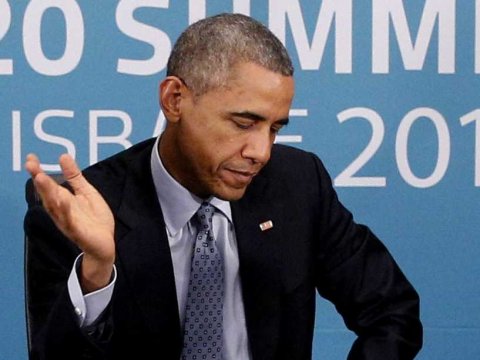
And President Obama remains silent
"Not my problem"
“Not my problem”
His silence speaks volumes


Share:

Here is what a 2 year old child from Gaza had to say for his first words

This is one of the saddest emails I ever received from a dear friend in Gaza ...
My little sister -2 years old- knows how to say "Dababa" which means military tank, and F16 fighter jet as well.
There is no Eid in Gaza, streets are still full of blood and it smells death in every corner. 
I am very worried for my family.
*
THIS IS SO WRONG!
ONLY YOU CAN MAKE IT RIGHT!!
Share:

IDENTIFYING WITH THE CHILD VICTIMS OF GAZA


There is a brand of Judaism that declares, “It happened to us, so it shouldn’t happen to us again.” This is what I see too much of right now. Yet I’m not giving up on the idea that suffering can create fair-mindedness and justice. My version of Judaism — shared by more and more Jews — goes like this: “it happened to us, so it should never happen to anyone, ever. Especially not at our hands.”
To everyone who is reading this article and saying, “Yes, but… Hamas,” I would ask you to just stop with the “buts.” Take a single moment and allow yourself to feel this tremendous loss. Lay down your arms and grieve for the children of Gaza, who only yearned to run around outside and be free. It will hurt tremendously, but it might free you, too.
*

Those Boys on Gaza Beach Remind Me of My Brother

By Sarah Seltzer FOR

*

Sarah Seltzer with her twin brother as children.
*
I have a twin brother who, as a kid, frequently ran around outside with a ball and his friends — usually in New York’s parks. Woe to the teachers at our Jewish day school who denied them gym or recess: they acted up extra-rambunctiously when they were cooped up. One of the cardinal lessons of my childhood was this: If you don’t let kids run around, everyone suffers. So that, in part, explains why the boys on the beach in Gaza proved my breaking point — boys who had been shut in for over a week and just wanted to kick a ball around, for a blessed few hours, and feel the air.
I was no fan of Israel’s actions in Operation Protective Edge up until that moment — in fact I was appalled by what I read in the Forward and elsewhere — but when I saw the footage of those lanky boys running on the beach, and their parents’ stricken faces when they learned their boys had fallen at the hands of Israeli shelling, I totally lost it.
They could be my family. They are my family. I see myself, my loved ones in them. So that’s what I keep saying to people when they bring up Operation Protective Edge — those boys reminded me of my brother and his pals, and sometimes me, running around with them, trying to get a good kick or two in. Some might say it is naive, and small, of me to reduce this conflict to miniscule, selfish dimensions rather than use the broad social strokes that many on both sides encourage in online discourse: this is about colonialism, imperialism, say some. This is about terrorism, say others.
Personal hatred, prejudice, antipathy and the thirst for vengeance — these common human feelings are the fuel that feeds the massive machines of terror, occupation and imperialism. And at the moment, it seems to me that a lot of the organized Jewish community — with clear exceptions — is as warped by antipathy and alienation, in the same way our leaders have long accused the Palestinians of being warped. “They don’t see us as human,” I’ve been told. But based on the Facebook posts I’m seeing, many of us don’t see them as human, either. Many of my timeline buddies are not even allowing a window, a second to mourn, so quick are they to pin the blame anywhere but at Israel’s feet. “I’m sorry for the loss of life, but…” they say. Why, why do we have to insert that “but”?
Perhaps the issue is this: to accept that Israel is utterly in the wrong here, that her government faced a moral test and flunked it with flying colors, is to accept something profoundly sad about our warped species: oppression doesn’t necessarily breed compassion. And by extension, Jews are not chosen. We are not chosen for anything except being another flawed people in a world of flawed peoples, unable to wield massive power without using that power toward brutal ends (just like everyone else, no worse but no better).
Maybe it’s easier for me, a girl who went to Israel at 16 and felt a sense of homecoming, to swallow this bitter pill after watching progressives tear each other down for a decade. Feminists can be racist. Queer people can be transphobic. Those who have been barred from spaces often feel justified excluding others. No formula exists that compels those who have suffered to be noble.
There is a brand of Judaism that declares, “It happened to us, so it shouldn’t happen to us again.” This is what I see too much of right now. Yet I’m not giving up on the idea that suffering can create fair-mindedness and justice. My version of Judaism — shared by more and more Jews — goes like this: “it happened to us, so it should never happen to anyone, ever. Especially not at our hands.”
To everyone who is reading this article and saying, “Yes, but… Hamas,” I would ask you to just stop with the “buts.” Take a single moment and allow yourself to feel this tremendous loss. Lay down your arms and grieve for the children of Gaza, who only yearned to run around outside and be free. It will hurt tremendously, but it might free you, too.
The views expressed in this article are the sole responsibility of the author and do not necessarily reflect those of this website
Share:

In Mourning for all those massacred from #GazaUnderAttack

NEW YORKERS HONOUR THE MARTYRS OF GAZA ~~ IN PHOTOS


Mock Funeral held for the victims …
We met in Bryant Park behind the 42nd St. library, read the names of the dead, and then began a silent walk, only the sound of a drum, across 42nd St to the Israeli Consulate on 2nd Ave. We carried signs, Palestinian flags, figures of people wrapped in white, and some wore blood stained shrouds.  People on the crowded streets stood aside and watched our long line pass.  Some took photos.  When we got to the consulate we chanted and after about an hour we went to the Egyptian Consulate and did the same there.
*
Photos © by Bud Korotzer
*
SONY DSC
*
SONY DSC
*
SONY DSC
*
SONY DSC
*
SONY DSC
*
SONY DSC
*
SONY DSC
*
SONY DSC
*
SONY DSC
*
SONY DSC
*
SONY DSC
*
SONY DSC
*
SONY DSC
*
SONY DSC
*
SONY DSC
*
SONY DSC
*
SONY DSC
*
SONY DSC
*
SONY DSC
*
1e22222e
Share:

CONDEMNATION OF ISRAEL IS NOT ENOUGH - THEY NEED TO BE HELD TO ACCOUNT

A country that fails to abide by international law, that refuses to withdraw from Arab lands it has occupied since 1967, that practices racism against its Palestinian citizens, that refuses to allow Palestinian refugees to return to their homes and lands, is a country that should be expelled from the community of nations. International solidarity with Gaza and the Palestinians demands no less than the complete isolation of apartheid Israel.

Gaza needs more than condemnation

Haidar Eid FOR VIA DESERT PEACE


Protesters demonstrate against Israel’s attacks on Gaza at the Hague on 12 July.  (Robert Soeterik)
The Palestinians of Gaza, naively, went to the polling station in January 2006, mistakenly believing the Bush doctrine of bringing democracy to the Middle East — in spite of him being responsible for the brutal massacre of hundreds of thousands of innocent people in Iraq and Afghanistan.
People voted, but not for the preferred choice of the Israelis, or their American backers and the Arab dictators. The Palestinian choice was against the peace process industry, against the fiction that is the ever-slippery two-state solution, against the corruption of the Oslo-eranouveau riche.
The outcome was a surprise not only for the Oslo camp, but also for the winners themselves: Hamas. And Palestinians, especially those in Gaza, were made to pay a heavy price for this transgression: the imposition of a severe siege described by Israeli historian Ilan Pappe in 2006 as “genocide.”
But the deadly siege was not enough to satisfy Israel’s hunger for Palestinian blood. The Palestinians of Gaza refused to passively accept Israel’s siege, like good natives are supposed to. Hence, Israel ferociously attacked Gaza in three horrific assaults in 2006, 2009 and 2012 and now again in 2014.
In all of these attacks, the people of Gaza were left alone to face one of the strongest armies in the world — an army that has hundreds of nuclear warheads, thousands of trigger-happy soldiers armed with Merkava tanks, F-16s, Apache helicopters, naval gunships and phosphorous bombs made in the United States. Gaza has no army, no navy and no air force. And yet Israelis claim to be under threat and fear for their lives!

Complicity

Commenting on this situation in Gaza, Karen Koning AbuZayd, former commissioner-general for UNRWA, the UN agency for Palestine refugees, said in 2008: “Gaza is on the threshold of becoming the first territory to be intentionally reduced to a state of abject destitution with the knowledge, acquiescence and — some would say — encouragement of the international community.”
We in Gaza know very well that Israel could not have carried out its current genocidal war, preceded by this horrific siege and a series of massacres before it, without a green light from the so-called international community.
Tellingly, an Israeli soldier was quoted by Israel’s Haaretz newspaper in 2009: “That’s what is so nice, supposedly, about Gaza: You see a person on a road, walking along a path. He doesn’t have to be with a weapon, you don’t have to identify him with anything and you can just shoot him.”
But this aggression is not new; none of these wars have been a response to Qassamrockets fired from Gaza.
The 1948 Genocide Convention clearly states that one instance of genocide is “the deliberate infliction of conditions of life calculated to bring about the physical destruction of a people in whole or in part.”
Sara Roy, an expert on Gaza, describes the Strip as follows:
[Gaza is] a land ripped apart and scarred, the lives of its people blighted. Gaza is decaying under the weight of continued devastation, unable to function normally …The decline and disablement of Gaza’s economy and society have been deliberate, the result of state policy — consciously planned, implemented and enforced. Although Israel bears the greatest responsibility, the United States and the European Union, among others, are also culpable … All are complicit in the ruination of this gentle place. And just as Gaza’s demise has been consciously orchestrated, so have the obstacles preventing its recovery.
The Food and Agriculture Organization and World Food Program stated in a 2009 report: “The evidence shows that the population is being sustained at the most basic or minimum humanitarian standard.”
As Ilan Pappe argues in Out of the Frame, mainstream discourse in Israel is about the need to destroy Gaza once and for all: “today from the left to the right, from academia to the media, one can hear the righteous anger of a state that more than any other in the world is destroying and dispossessing an indigenous population.”
And now, judging by the increasing air raids, the incitement of Israel’s war-mongering generals and politicians, Israel is putting that ideology into practice. As Thursday evening, Gaza time, the latest statistics are horrific: 237 dead, more than 50 of them children, and 1,770 injured, according to the Gaza health ministry, and more than 1,600 homesdemolished in broad daylight.
And yet those in places of power, unsurprisingly, still back Israel’s “right to defend itself,” conveniently forgetting or in the case of the Obama administration, denying that those who are oppressed and dispossessed also have the right to resist their oppression. Israel is intent on destroying Gaza and international official bodies and administrations like Obama’s repeatedly declare their commitment to Israel’s “security” like a broken record, without a care for Palestinian lives.

Urgent

The urgent question facing us in Gaza is not just how to survive for today, but how to hold Israel accountable to international law and basic principles of human rights; how to stop the current escalation and the ongoing massacre and how to stop this from ever happening again.
Knowing that the credible Goldstone report on suspected war crimes in Gaza in 2008-09, and reports by Amnesty International and Human Rights Watch are all ignored or undermined, there is a bitter awareness that we in Gaza can have no expectation of Israeli accountability for the current onslaught. But this is in the short term only — in the long term, we know that Israel will have to answer to its oppression of Palestinians because this oppression will end one day. History will have it no other way.
What Palestine needs from the world today is not just a condemnation of the Gaza massacres and siege, but also a delegitimization of the ideology that produced this policy and justifies it morally and politically, just as the racist ideology of apartheid was delegitimized.
It seems, however, and again, as Ilan Pappe notices, that even horrendous crimes, such as the genocide in Gaza, are treated as “discrete events, unrelated to events in the past and dissociated from any ideology or system.” Supporters of Palestine must always relate today’s massacres to the original sin of colonization of the land which Israel has claimed for its own and the dispossession of its indigenous people.
The window of hope comes from the lessons we have learned from South Africa, where the ugly apartheid regime came under mounting pressure from outside. It is time for international civil society, as opposed to the ineffectual United Nations, to redouble their support for our struggle against apartheid in Palestine today. As Palestinians under Israeli siege, occupation and apartheid, we increasingly rely on international law and solidarity for our very survival. That solidarity is needed more than ever today.
The best way to honor those killed, injured and made homeless in Gaza is to raise your voices even louder and demand that governments impose sanctions against Israel. Now is the time to increase the number of universities and businesses that boycott Israel. Now is the time to demand divestment from more pension funds. Now is the time for more countries to cut all ties with Israel.
A country that fails to abide by international law, that refuses to withdraw from Arab lands it has occupied since 1967, that practices racism against its Palestinian citizens, that refuses to allow Palestinian refugees to return to their homes and lands, is a country that should be expelled from the community of nations. International solidarity with Gaza and the Palestinians demands no less than the complete isolation of apartheid Israel.
Haidar Eid is an independent political commentator from the Gaza Strip, Palestine.
Share:

OPEN LETTER TO JOHN KERRY

You obviously have a problem with reading, so these might be of help to you  in standing by the original words you muttered … Can you not see the similarities in the images below?
*

*
apt top1
*
apt top2
*
apt top3
*
apt1
*
apt2
*
1925352_10151665135569567_2113418586_n
 *
iapt2
*
africa-united-nation-photo
*
grafitti_wall
*
And some attitudes and policies … Prepared by Michael Rivero
*
Share:

EGYPT OFFICIALLY UNDER ISRAELI CONTROL

First read THIS from HaAretz ....


If you still have doubts about the heading of this post read on ...
*
CODEPINK Co-founder Medea Benjamin Detained, Brutally Attacked and Deported from Egypt en route to Gaza with International Delegation of Women

On the night of March 3, 2014, co-founder of the peace group CODEPINK Medea Benjamin was on her way to Egypt to join an international delegation of women going to Gaza when she was detained by border police in the Cairo airport, held overnight in a cell, and then brutally tackled (her arm badly injured), handcuffed, and deported to Turkey. During her time in the detention cell she had access to a cell phone, from which she contacted colleagues at CODEPINK about the poor conditions of the cell and chronicled her ordeal via Twitter. When the Egyptian police removed her from the detention center, they used such excessive force she sustained a fracture and torn ligament in her shoulder.

Calling from Istanbul, Benjamin gave the following statement: “I was brutally assaulted by Egyptian police, who never said what I was being accused of. When the authorities came into the cell to deport me, two men threw me to the ground, stomped on my back, pulled my shoulder out of its socket and handcuffed me so that my injured arm was twisted around and my wrists began to bleed. I was then forced to sit between the two men who attacked me on the plane ride from Cairo to Istanbul, and I was (and still am) in terrible pain the whole time.” Doctors in the Cairo airport said she was not fit to travel because of her injury, but the authorities forced her to board anyways.

She is currently in Istanbul, Turkey, receiving medical attention at a hospital before she returns to the US. It is still unclear why the Egyptians deported her. Medea’s colleagues at CODEPINK are appalled by the unnecessary use of force by Egyptian authorities.

In response to a call from the women of Gaza, Benjamin was traveling through Egypt to be a part of the CODEPINK contingent of an international coalition of 100 women traveling to Gaza to witness the hardships facing the 1.7 million residents, deliver humanitarian aid, and call attention to the need for a longer-term strategy to achieve peace and justice for Palestinians.

From a CodePink Press Release
Share:

THERE WILL NOT BE PEACE IN ISRAEL UNTIL …

There can be no talk of peace in the current climate. The struggle faced by the Palestinians in Israel is for full civil rights and an end to discrimination, as the struggle faced by their brethren in the Palestinian territory is to end the 46-year-long occupation. Both will continue to fight for these human rights, because they can’t be trampled on forever.


Palestinians in Israel The Struggle for Rights
By Fida Jiryis *

“In fact, in the ‘sovereign state of the Jewish people’ there is little hope that Arab citizens will gain equal rights. For the Jewish majority, Israel is comparable in its civil liberties and inequities to Western democracies. But Arabs have no place in the Jewish state, except as a tolerated but essentially foreign element […] There is no substantial segment of Israeli society that opposes or seriously questions the fundamental principle of discrimination.”i 
Few situations are as complex or riddled with contradiction as that of the Palestinian citizens of Israel. While many other minorities in the world suffer from discrimination and animosity, few are seen so blatantly as an enemy who must be treated with systematic oppression, with the hope that it would somehow disappear. A ludicrous notion, yes, but one that is deeply entrenched in the Israeli psyche and that will take a long process of understanding to reverse.Sadly, that process has not begun. Israel’s Palestinian minority is treated with mounting animosity and suspicion, targeted by a system of institutionalised, state-condoned discrimination and racist laws. In the “only democracy in the Middle East,” it has become commonplace to speak of a Jewish-only state, oaths of allegiance to such a state, and the threat of revoking citizenship from any dissidents – which is unparalleled worldwide and is against human rights – whose “crimes” may amount to no more than speaking out against injustice. In fact, the state goes far beyond this: it refers to its Palestinian citizens as a “demographic problem,” and its politicians frequently speak on policies of “transferring” them to the Palestinian territories, as though these “citizens” are pawns to be moved at will. In short, Israel defines itself as a Jewish state, and those Palestinians who live in it – about 1.5 million people, or a fifth of its population – are a thorn in its side. It wants to be rid of them to fully practice being its exclusionist self.
While these Palestinians are, on paper, free and equal citizens of the state, in reality, this citizenship is far from equal. I have only to travel through Ben Gurion Airport in Tel Aviv, for example, to be reminded of this. The infamous search process there has been described by many, and I’ve met one or two foreigners who, after having experienced it, have sworn never to come back. As soon as I line up at the check-in, an army of security personnel pounces. They see my passport, recognise me as Palestinian, and immediately give me a sticker that indicates that I must be searched. I’m then subjected to long, detailed questioning about where I’m going and for what purpose, and an equally harrowing baggage search, which is done slowly and manually, as though the x-ray machines wouldn’t pick up objects of suspicion. People’s reaction to this treatment is varied; some are frightened and intimidated, but most are humiliated and furious; many a voice rises in these halls.
Well, one does not travel every day. More pressing are the questions of daily life and work. For Palestinians to actually get jobs in the Israeli system is an exercise in itself. When I arrived in the Galilee in 1995, fresh out of Lancaster University in England with a BSc in computer science and some work experience, numerous interviewers in Israeli hi-tech companies demanded my army number. I was unable to provide it. Palestinians are exempt from serving in the Israeli army that oppresses their fellow Palestinians in the occupied territories. I was thanked and told that the companies would “call me.” No such calls came. In fact, as I discovered, this is the state’s way of discriminating against Palestinians in employment without appearing to do so outright. In the few instances when I found a job, it was in smaller companies with less rigid hiring procedures that were usually desperate for someone who knew English, since neither Arabs nor Jews in Israel are especially fluent in English. Twice, I found myself the only Arab among thirty or more Israeli employees.
The state has put in place an almost mind-boggling array of discrimination tools, such that one almost wonders at the ingenuity with which a people can practice systematic oppression of another.
In every Arab community, and in the five mixed cities where both Jews and Arabs live, de facto discrimination is readily apparent. Israel’s 1.37 million Arab citizens vote, pay taxes, and speak Hebrew, yet they suffer pervasive discrimination, unequal allocation of resources and violation of their legal rights. Housing, education, and income all substantially lag behind those of the Jewish majority. Only 3 percent of the land in Israel proper is owned by Arabs; permits are rarely granted to Arab families to expand their housing; and most Jewish towns and neighbourhoods remain off-limits.ii
Even more alarming, Israeli society is tending more towards right-wing ideology and racism. A 2012 surveyiii found that most Israelis believe that the state practices “apartheid” against Palestinians, and they are in favour of this. One-third to one-half of Jewish Israelis, according to the survey results, want to live in a state that practices formal, open discrimination against its Arab citizens.
The majority of the Jewish public, 59 percent, wants preference for Jews over Arabs in admission to jobs in government ministries. Almost half the Jews, 49 percent, want the state to treat Jewish citizens better than Arab citizens; 42 percent don’t want to live in the same building with Arabs and 42 percent don’t want their children in the same class with Arab children.
A third of the Jewish public wants a law barring Israeli Arabs from voting for the Knesset and a large majority of 69 percent objects to giving 2.5 million Palestinians the right to vote if Israel annexes the West Bank.
A sweeping 74 percent majority is in favour of separate roads for Israelis and Palestinians in the West Bank.
The findings “reflect the widespread notion that Israel, as a Jewish State, should be a state that favours Jews,” wrote Noam Sheizaf, an Israeli journalist and blogger. “They are also the result of the occupation … After almost half a century of dominating another people, it’s no surprise that most Israelis don’t think Arabs deserve the same rights.”
Far from building bridges and attempting to negotiate a peaceful reconciliation, we live at the opposite end of the spectrum.
What do people do? Well, what they do everywhere else: they get up, send their children to school, and go out to battle the odds for survival every day. Some attend Israeli universities, get degrees, then usually find themselves in lower paying jobs that they’re just glad to have. Others finish school and, with difficult financial conditions being prevalent among the Arab population and their not being eligible for any government student loans, find themselves out of education and in the workforce. A large number of Israel’s Palestinians thus work in construction, factories, and other forms of manual labour simply because of lack of opportunity. Many university graduates also join these ranks after spending years looking for a professional job to no avail.
But Palestinians are highly resilient, because they’ve simply had to be. So they keep their culture, speak their language, albeit with a lot of Hebrew influence, and practice their customs. They protect as much as they can of their heritage and push forth for a decent life in this state that was forced on them. And, at the end of the day, they’re not going anywhere.
In recent years, also, youth have become fed up with the system and are more forthcoming in voicing their dissent. Their parents and grandparents grew up in a culture of military rule; today’s generation is far from being intimidated. It is getting more education and is realising, as it sees itself within the world and looks at other countries, that it is living in a system of apartheid. There is increasing awareness among Palestinians, even the poorest and least educated, that they are not being treated fairly and that discrimination is a yoke on their backs.
There can be no talk of peace in the current climate. The struggle faced by the Palestinians in Israel is for full civil rights and an end to discrimination, as the struggle faced by their brethren in the Palestinian territory is to end the 46-year-long occupation. Both will continue to fight for these human rights, because they can’t be trampled on forever.
*Fida Jiryis is a Palestinian writer, editor, and author of Hayatuna Elsagheera (Our Small Life), 2011, and Al-Khawaja, 2013, two collections of Arabic short stories depicting village life in the Galilee. 

i The Arabs in Israel, Sabri Jiryis, Monthly Review Press, USA, 1976, p. xi.
ii The Paradox of Ethnicity and Citizenship, New Israel Fund, 2011, http://www.nif.org/issue-areas/israeli-arabs/.
iii The new Israeli apartheid: Poll reveals widespread Jewish support for policy of discrimination against Arab minority, Catrina Stewart, The Independent, Tuesday October 23, 2012; Survey: Most Israeli Jews wouldn’t give Palestinians vote if West Bank was annexed, Gideon Levy, Haaretz, October 23, 2012.
Written FOR via Desert Peace
Share: