 |
GAZA,(PIC)-- Sixteen local radio stations in the Gaza Strip and West Bank agrees on Tuesday to unite broadcasting for the striking prisoners in Israeli jails. The prisoners Committee for the National and Islamic Forces in West Bank and Gaza strip confirmed that the radio stations' broadcast will be specialized in prisoners' issue starting from Tuesday for half an hour, during which liberated prisoners, and official institutions concerned in prisoners' issue, and striking prisoners'' families. It is noted that four Palestinian prisoners went on hunger strike in Israeli jails, Samer Barq for 107 days, Hassan Safadi for 70 days, Ayman Sharawna for 67 days, and Sami Issawi for 36 days running. The Committee called on visual, print, and audio media to stand behind prisoners' issue and the striking prisoners in particular and to cover their daily news, stressing that the prisoners Committee for the National and Islamic Forces seeks to unite all the efforts for prisoners’ issue. |
Showing posts with label #PalHunger. Show all posts
Showing posts with label #PalHunger. Show all posts
Two Dutch political parties resolve to campaign for Palestinian child detainees
In June, both the Socialist and GreenLeft political parties in the Netherlands passed resolutions in support of Palestinian child prisoners.  At the assembly of the Socialist Party (SP) held on 2 June 2012, the Assembly noted that “international child rights treaties should be respected and children all over the world deserve humane treatment in which there is no place for abuse, humiliation, threats or the use of solitary confinement,” and decided as follows:
• DCI-Palestine - Bound, Blindfolded and Convicted
• B’Tselem – No Minor Matter
• DCI-Palestine - Urgent Appeal – Forcible transfer of children
• DCI-Palestine – Urgent Appeal – Solitary confinement
• The Guardian – The Palestinian children – alone and bewildered – in Israel’s Al Jalame jail
At the assembly of the Socialist Party (SP) held on 2 June 2012, the Assembly noted that “international child rights treaties should be respected and children all over the world deserve humane treatment in which there is no place for abuse, humiliation, threats or the use of solitary confinement,” and decided as follows: - The actions of Gate48, A Different Jewish Voice, Defence for Children International, Palestine Link and others surrounding Palestinian children in Israeli detention should be vigorously supported inside and outside parliament; and
- The Socialist Party calls on the Dutch government to speak out firmly against the practice of detaining children in solitary confinement in its contacts with Israel, and to call for a total ban of the practice.
At the assembly of the GreenLeft Party held on 30 June 2012, the Assembly noted that the Fourth Geneva Convention explicitly prohibits the transfer of prisoners out of occupied territory. The Assembly also noted that the outgoing Dutch Ministers of Foreign Affairs (Rosenthal) and Economic Affairs (Verhagen) ignored both Palestinian and Israeli human rights organisations during their recent visit to the region in June. The Assembly decided as follows:
- To act on the issue of Palestinian children in Israeli captivity both in and outside the Dutch and European parliaments; and
- The GreenLeft Party calls on the Dutch government to speak out against the arrest and detention of Palestinian children in its contacts with Israel.
Related links:
• UK Lawyers' report - Children in Military Custody• DCI-Palestine - Bound, Blindfolded and Convicted
• B’Tselem – No Minor Matter
• DCI-Palestine - Urgent Appeal – Forcible transfer of children
• DCI-Palestine – Urgent Appeal – Solitary confinement
• The Guardian – The Palestinian children – alone and bewildered – in Israel’s Al Jalame jail
Take action for Palestinian prisoner Akram Al-Rikhawi!

Urgent: 83 Days of Hunger Strike- Take action for Palestinian prisoner Akram Al-Rikhawi!
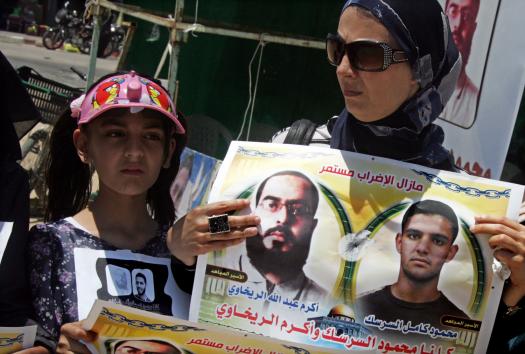 Palestinian political prisoner Akram Al-Rikhawi is currently on his 83rd day of hunger strike, in severe danger of death. He is suffering from numerous medical conditions, including diabetes, asthma, high cholesterol, osteoporosis, glaucoma, kidney problems and immune deficiency. Addameer reports that “Prior to his arrest, Akram received injections of Kenacort to treat his asthma, but following his arrest, the Israeli Prison Service (IPS) did not allow Akram to take this injection. Instead, it was replaced with injections of cortisone, which is most likely the cause of severe complications, resulting in additional chronic illnesses such as diabetes and osteoporosis, from which Akram now suffers.” Take action today to call for the immediate release of Akram al-Rikhawi!
Akram began his hunger strike on April 12 of this year to demand his early release due to his heath circumstances. He also has eight children, and he and his wife are also responsible for the care of the five children of his late brother. Despite his severe health circumstances and his difficult family and economic straits and responsibility for 13 children, his appeals for early release in 2012 and on June 5, 2012 were both rejected.
He did not stop his hunger strike on May 14 at the time of the agreement between prisoners and the Israel Prison Services because his unique circumstances were not addressed – namely, early release on medical grounds. Physicians for Human Rights were denied access to Akram for nearly two months, until June 6. He has lost 26.5% of his body weight – and was already very unhealthy. Akram has been refusing medical examinations since mid-May – and in response, the cortisone injections have only increased. PHR has stated that he must be transferred immediately to a civilian hospital in order to receive proper medical care, and filed suit to demand he be transferred – which wasdenied by an Israeli District Court on June 14.
On the heels of the victory achieved by Mahmoud Sarsak after an unprecedented 95-day hunger strike, in which Sarsak, held without charge or trial under a new law labelling uncharged detainees from Gaza as “unlawful combatants” – won his release, scheduled for July 10. Sarsak – a Palestinian football player on the national team – was released after international publicity – including statements from FIFPro and FIFA officials and players – was drawn to his case. It is urgent that we act now to free Akram Rikhawi and secure his much-needed medical care.
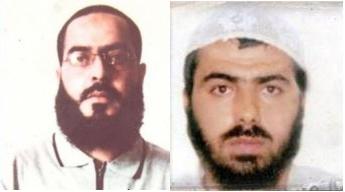 Akram al-Rikhawi is not the only Palestinian prisoner currently on hunger strike. Samer al-Barq has now been on hunger strike since May 22, for 43 days, protesting Israeli violations of the agreement with the prisoners – after his own administrative detention, rather than expiring as agreed by the Israelis at the end of the strike, was renewed for an additional three months. Samer al-Barq is now on hunger strike until his release is secured.
Samer al-Barq is not the only Palestinian victim of the Israeli violations of the agreement ending the hunger strike. Notably, Hassan Safadi, a long-term hunger striker who had been striking for 71 days at the time the agreement was concluded, had his administrative detention order renewed by the Israelis on June 21, despite the explicit agreement that the long-term hunger strikers such as Safadi serving in administrative detention without charge or trial would not have those orders renewed. Safadi is now on his 13th day of hunger strike and plans to continue until he is released.
Addameer reports that the cases of al-Barq and Safadi are not the only examples of Israeli intransigence and violation of the agreement:
In regards to the implementation of the agreement as a whole, one of the 19 prisoners in long-term isolation, Dirar Abu Sisi, has still not been moved to the general prison population, and an additional prisoner was moved to isolation last week. Furthermore, family visits to prisoners from Gaza have not yet resumed, though one month has passed since the agreement was signed. Addameer has observed no change in Israel’s overall administrative detention policy and fears that these practices will only continue without significant pressure from the international community.
Administrative detention, mass roundups, and military trials are continuing in Palestine. Activists like Walid Abo Rass, the financial and administrative manager of the Health Work Committees – a community based health organization – continue to be kidnapped and held arbitrarily in occupation prisons. International solidarity and action is needed to hold the occupation accountable for its ongoing imprisonment and abuse of the people of Palestine!
TAKE ACTION!
1. Sign a letter demanding the Israeli state transfer Akram Rikhawi, Samer al-Barq and Hassan Safadi immediately to hospitals and release them. Tell the Israeli Prison Services that the world is watching! Click here to sign.
3. Sign this petition to demand the release of Palestinian health worker Walid Abo Rass and all other administrative detainees.
4. Join a protest or demonstration for Palestinian prisoners. Many groups and organizations are holding events – join one or announce your own. Organizing an event, action or forum on Palestinian prisoners on your city or campus? Use this form to contact us and we will post the event widely. If you need suggestions, materials or speakers for your event, please contact us at samidoun@samidoun.ca.
5. Contact your government officials and demand an end to international silence and complicity with the repression of Palestinian political prisoners. In Canada, Call the office of John Baird, Foreign Minister, and demand an end to Canadian support for Israel and justice for Palestinian prisoners, at : 613-990-7720; Email: bairdj@parl.gc.ca. In the US, call the office of Elizabeth Jones, Acting Assistant Secretary of State for Near East Affairs (1.202.647.7209). Demand that Elizabeth Jones bring this issue urgently to his counterparts in Israel.
Israel is working overtime to reach new heights of prisoner torture and abuse of Palestinians
Israeli prison guards 'forcing
detainees to strip in cell raids'
BETHLEHEM (Ma'an) -- Israeli prison services are raiding the cells of detainees who participated in a mass hunger strike, the PA Ministry of Detainee Affairs said Monday.
Prison guards are raiding detainees' cells at night and forcing them to strip, leading to clashes between jail authorities and prisoners, the ministry said in a statement.
In Eshel prison in Beersheva, prison guards raided three sections and strip searched detainees. Prisoners were handcuffed for six hours as guards confiscated electronic devices, including fans, and destroyed prisoners' belongings, the ministry said.
Prison guards also beat several detainees, the ministry said. Ayman Hmaideh sustained facial injuries, Ashraf Zghari was injured in his eye and Khalil Msalam was beaten across his body.
Similar raids were carried out in Nafha, Ramon, Ashkelon, Ofer and Hadarim jails, the ministry said.
Israeli Authorities Breach Last Month’s Prisoner Agreement
By Dylan Collins
After undergoing 71 days without food, Palestinian prisoner Hasan Safadi is back on hunger strike protesting the renewal of his administrative detention, a breach of the agreement signed between the Israeli authorities and the Palestinian prisoners’ committee on May 14. Safadi’s administrative detention order was renewed Thursday 21 June 2012 for an additional six months.
Last month’s agreement put an end to the 28-day long mass hunger strike of approximately 2,000 Palestinian prisoners in Israeli jails. In return for ending their strike, Israeli authorities promised the higher Palestinian hunger strike committee that they would curtail their rampant use of administrative detention, although nothing was offered in writing.
Palestinian human right group Addameer stated on Thursday that by renewing Safadi’s administrative detention order, Israel has broken the May 14th agreement it struck with the Palestinian prisoners’ committee.
"Hassan, who launched his hunger strike on 5 March, was one of the five long-term hunger strikers in administrative detention who were promised release upon the expiration of their current orders in the agreement that ended the Palestinian prisoners’ mass hunger strike on 14 May. Hassan has been held in administrative detention since 29 June 2011 and this renewal of his detention is a blatant violation of the agreement between the prisoners’ hunger strike committee and Israeli officials," Addameer said in a statement on Thursday.
In response to his renewed detention, Safadi re-launched his hunger strike the same day. He is currently being held in Israel’s Hadarim prison, without charge or trial.

Israeli soldiers deliberately shooting tear gas at journalists during a solidarity demonstration for Palestinian prisoners on Thursday 21 June 2012, outside of Israel’s Ofer prison near Ramallah.
Several Palestinian prisoners are still on hunger strike in protest of Israel’s exploitive practice of administrative detention. Akram Rikhawi, who suffers from many illnesses and is dangerously close to death, is currently on his 73rd day without food.
Israel has yet to fulfill other obligations included in last month’s deal as well. Family visits for prisoners from Gaza have not yet been resumed, as were promised in the deal.
Additionally, Addameer’s statement on Thursday revealed that one of the nineteen prisoners held in isolation, a policy which Israeli officials vowed to discontinue, has not yet been moved into the general prisoner population, and last week an Palestinian prisoner was placed in solitary confinement.
Addameer worries that additional violations of the deal are likely to follow.
"(T)here is now no guarantee that any of the long-term hunger strikers will be released upon their given dates," Thursday’s statement said.
Source
Palestinian prisoners’ conference declaration statement
Organisers: UFree Network and Irish Friends of Palestine
 Since 1967, when Israel occupied the West Bank, Gaza Strip and East Jerusalem, more than 700,000 Palestinians have been detained by Israel. This represents approximately 20% of the total population in the Occupied Palestinian Territories (OPT), and 40% of all males. Despite prohibition by international law, Israel detains Palestinians in prisons throughout Israel; far from their families. The latter almost never obtain the necessary permits to visit their imprisoned relatives.
Since 1967, Israel has detained 10,000 Palestinian women. Women prisoners endure inhumane conditions including shackling during childbirth and an ongoing lack of gynecological care. Today, 37 female Palestinian prisoners continue to be held in Israeli prisons. Most are elected members of the Palestinian Legislative Council and, thus, are clearly political prisoners.
This Conference on the Plight of Palestinian Prisoners in Israel Prisons was convened by UFree Network and Irish Friends of Palestine on 19th May 2012. We have gathered in Belfast uniting elected representatives, former prisoners and prisoners’ relatives and human rights activists
We heard speeches from former Prisoners and Palestinian human rights activists of the conditions facing Palestinians in Israeli jails.
We learned of
· The detention of Palestinians for more than 5 years without trial.
· The widespread use of solitary confinement for many years at a time
· The denial of family visits for many years on end
· The imprisonment of Palestinian children and on occasions the use of these child prisoners as hostages to pressurise their families.
· Threats and practice of sexual harassment.
· Abduction of elected Palestinian parliamentarians
Conclusion
Conference concludes that the conditions facing Palestinian prisoners in Israeli jails constitutes cruel and inhumane treatment and that such conditions breach numerous aspects of international law.
We pledge our support to UFree Network’s international campaign to highlight and challenge the abuse of Palestinian Prisoners human rights and the human rights of their families.
The conference decides to have a working group in cooperation between UFree Network and Irish Friends of Palestine which will be a broad based group in Ireland. From today, we shall be contacting potential members to join this group.
The group will work on the following:
1. To spread awareness about the issue of Palestinian prisoners
2. To exert political pressure on both the Israeli occupation and international governments.
3. To offer appropriate legal support and rehabilitation of former prisoners.
The group shall lobby Parliamentarians, human rights groups and civil society throughout Ireland, in particular to the Irish Government and other European Governments and the European Union, appealing for support for the following actions:
1. Israel should embrace and implement their obligations under International law by
2. Immediately implement the agreement reached with prisoners to end the hunger strike, including an end to solitary confinement and imprisonment without trial
3. The European governments and EU Parliament:
4. Launch and participate in an international solidarity campaign supporting the Rights of Palestinian prisoners and detainees.
5. Establish a European fact-finding mission to examine the living conditions of the prisoners in the Israeli jails.
The Irish Government in particular should:
· Organise its own fact finding mission to visit prisoners and their families to inform itself of conditions in Israeli prisons.
· Report back to Dail Eireann on the outcome of this fact finding mission.
· Take diplomatic action and sanctions against the Israeli government if it fails to honour international conventions and comply with the human rights’ standards in dealing with the prisoners.
Click here for more coverage on the conference:
UFree Network | Media Centre
UFree is an independent European-wide human rights network; set up to defend the rights of Palestinian prisoners and detainees
 Find us on Facebook
 Follow us on Twitter
 Subscribe on YouTube
Three Palestinians 'restart' hunger strike
Three Palestinian prisoners in Israeli jails are refusing food, despite the signing this week of a deal to end a mass prisoner hunger strike, Israeli and Palestinian officials said on Thursday.
An official from the Palestinian Prisoners' Club, which tracks the well-being of the 4,700 Palestinians in Israeli jails, told AFP that "prisoners Mahmud Sarsak, Akram Rikhawi and Mohammed Abdel Aziz are still on hunger strike."
The official, who spoke on condition of anonymity, said none of the three had ever stopped their protest, even after prisoner leaders on Monday accepted a package of Israeli measures easing conditions in exchange for the end of a mass hunger strike that had grown to include about 1,550 detainees.
Israel Prisons Services spokeswoman Sivan Weizman confirmed that Sarsak and Rikhawi were refusing food, but said they had briefly stopped their hunger strikes on Monday, before resuming them on Tuesday.
There was no immediate confirmation from Weizman about Abdel Aziz.
"They ate on Monday night with the rest of the prisoners who ended their hunger strike," she told AFP of Sarsak and Rikhawi. "The prisoners then declared that they want to continue their hunger strike."
"Both are under medical supervision in the prison clinic in Ramle, near Tel Aviv, and in good condition."Weizman said Sarsak began refusing food on April 4, and was calling on Israel to recognise him as a prisoner of war.
Rikhawi is protesting his jailing without charge under an administrative detention order, which is issued by a military court and allows Israel to hold detainees without trial for renewable periods of six months.The use of administrative detention was a key inspiration for the mass hunger strike that swept through the Palestinian population in Israeli jails in recent months.
Early this year, prisoner Khader Adnan drew international attention by refusing food for 66 days to protest his administrative detention, eventually winning a deal under which Israel agreed not to renew his detention order.
He was followed by Hanaa Shalabi, who refused food for 43 days to protest her imprisonment without charge. She agreed to a deal under which Israel deported her from the West Bank to Gaza, where she must remain for three years.
Other prisoners who began refusing food alongside Shalabi continued their hunger strike, and they were joined by hundreds more in April, prompting international organisations and foreign governments to express concern.
The Egyptian-mediated deal announced Monday saw the prisoner leadership agree to end the strike in exchange for a package of measures, including visits from relatives in Gaza, and the transfer of detainees out of solitary confinement.
Palestinian prisoners in Israeli jails: Their legal status and their rights


The status of prisoners of war is a very complicated issue in international humanitarian law. Many people think - wrongly - that all of the Palestinian prisoners in Israeli jails are to be considered as prisoners of war. International humanitarian law, in particular the Third Geneva Convention of 1949 and its protocols, gives a very precise definition of "prisoner of war" which is not applicable to the majority of the Palestinians detained by the occupying power, Israel.
To understand this issue; we can divide the subject into two parts: Reference to prison names and locations and the number of prisoners - male, female and children should be mentioned. We can refer here to Israel's violation of article 76 of Fourth Geneva Convention which states that "protected persons" accused of offences shall be detained in the occupied country, and if convicted they shall serve their sentences therein.
Download the full briefing paper
Murder for fun and "morale": Shocking video of lethal Israeli attack on sleeping Palestinian prisoners
The camera follows heavily armed Israeli security personnel raiding a prison dormitory, shouting at the prisoners to get out of bed, and that they would be shot if they didn’t obey orders.
The prisoners can be heard screaming in terror at the surprise attack. It was a night of brutal and lethal violence that Israeli participants would describe as one that was "beautiful" and "happy."One of the Israeli attackers shouts, amid flashes, flame and smoke: "I want to open these gates and take care of these little sons of whores." Other Israelis shout vulgar Arabic insults at the prisoners regarding their mothers.
Prisoners writhe in agony and fear. One can be seen – in images reminiscent of Abu Ghraib – lying on the ground as an Israeli points a gun at him shouting "lie on your stomach!"
Others are shot without apparent reason.
These are scenes from a video that was shown in April 2011 by the investigative program Ovda on Israel’s Channel 2 television station. The violent attack it records against the Palestinian prisoners on 22 October 2007 was real, but it was carried out as a "training exercise" for Israeli security personnel at Ketziot Prison to boost their "morale" and "motivation."
One Palestinian, Muhammad Ashqar, was killed. No one has been charged in connection with his death although Israel recently agreed to pay compensation to his family.
This video, Ovda said, is one "the whole system" has been trying to keep under wraps for more than three years.
The deputy commander of the Israel Prison Service would rate his men’s performance in this horrifying and murderous violence with a "ten."
This shocking video and the events around it provide a rare glimpse into the lives of thousands of Palestinian prisoners held in Israel’s jails, more than 2,000 of whom recently completed a 28-day hunger strike against the cruel and inhumane treatment they receive.
Raising "morale" and "motivation"
Control of Ketziot Prison in the southern Naqab (Negev) region of historic Palestine was handed to the Israel Prison Service (IPS) from the Israeli army in 2007. The IPS then promised to toughen its handling of the prisoners, according to the Ovda narrator.According to Addameer, Ketziot, also known as Ansar or Negev Prison, is a primary detention place for Palestinians held in "administrative detention" without charge or trial.
One of the goals of the 2:00 am "training drill" shown in this video was to "raise the morale and motivation for the prison staff," according to Ovda, citing IPS documents.
The video is captioned "Massada Unit Training - archive," which is described as "the most combative unit in the prison service."
The "training" task given to the unit was to search for contraband in one of the prison’s wings.
The use of Palestinians – not just prisoners – as training guinea pigs for Israeli violence did not end with this incident. On 27 March, Rashad Shawakha, 28, was killed in cold blood in an attack on the West Bank village of Rammoun that was part of a "traning exercise" by an Israeli undercover unit.
A declaration of war

Palestinian prisoners during the Israeli attack at Ketziot Prison
The prisoners however are "stunned," and resistance is "insignificant." Meanwhile a voice is heard on the video of one of the Israeli personnel saying "the shooting is correct" (3:28) meaning that the shooting we hear in the background is authorized.
"This is not live fire," the narrator says, meaning regular bullets are not being used, "but these demonstration-dispersing measures could also kill."
But of course there was no demonstration to be dispersed. The prisoners had been asleep – in barred dormitories and in tents on the heavily-fortified prison’s grounds – when they were attacked with weapons that Israel authorities refuse to identify.
And presumably the prisoners did not know it wasn’t live fire and that they weren’t about to be killed. And the weapons used did kill on that night.
As things got out of hand, two commanders sent the Massada Unit fighters to storm the other wings of the prison.
At one point, an Israeli officer can be seen and heard speaking into a microphone as he faces the burning prison enclosure. He shouts in broken Arabic, "to all the prisoners, for the last time, whoever comes out and lies down on his stomach, we will not shoot him" (7:23).
"This is the last time before we shoot at everyone," he says (7:50).
The attackers, the narrator notes, shot with abandon despite the darkness.
An unknown weapon
A Palestinian identified as "Nabil" a former prisoner at Ketziot, told Ovda that the weapons fired by the Israelis caused extreme pain. "It strikes your body, and explodes," Nabil said (8:15).A second former prisoner who is not identified said that the weapons contain marbles.
Nabil, showing marks on his back, explained, "I was hit on the back and I couldn’t bear it, imagine if it hit me in the head, or the eye or another sensitive area."
The IPS, Ovda said, refused to disclose what weapon they used against the prisoners.
"One of the Arabs is wounded" - the murder of Muhammad Ashqar

Muhammad Ashqar lies fatally wounded and unattended on the ground
The camera pans to a man lying on the ground, with blood on his head.
Other voices, off camera: "Is there anyone there taking care of him?" "No, no-one, only Dima [a Russian name] is there with him."
The man lying on the ground unattended is Muhammad Ashqar, who was due to be released in a few months. There is no evidence he was doing anything to threaten his attackers.
Asqhar "had been jailed nearly two years before the incident for membership in Islamic Jihad," according to Haaretz which reported on 3 May that Israel agreed to pay 1.2 million shekels ($312,000) in compensation to his family.
But, the newspaper added:
However, the State Prosecution’s Office closed the case against the guards involved in the search, which ended with a dead prisoner, 15 injured prisoners, 15 injured guards and a burned section of the jail.It also noted:
The authorities first told the family that Ashkar had been shot while trying to escape, his father, Seti Ashkar, told Haaretz. Afterward they said he had accidentally been shot during the riot.Muhammad’s brother Loai, was also held at Ketziot prison without charge or trial during the 22 October 2007 attack.
Prisoner shot while negotiating with guards
Moments after the footage of Ashqar lying on the ground the video shows another prisoner emerge from one of the buildings into the yard (10:00). The Israeli attackers are negotiating with him. Yet in the midst of talking to him and for no apparent reason, they shoot at him. He falls to the ground with blood pouring from a wound in his leg. No one attends to him.Sitting on the ground, the wounded prisoner tries to treat himself, shouting at the other prisoners in the tent to come out, presumably lest they suffer the same fate.
Shot without provocation
Smadar Ben Natan, a lawyer representing the family of Muhammad Ashqar told Ovda that she found:- The Massada Unit fighters shot the prisoners even when there was no danger to their lives;
- The commanders’ initial plan was to tie the prisoners to their beds while they were still asleep, but that plan was shelved at the last moment;
- The Ketziot wardens were insufficiently trained.
"Ten"
When asked how he’d grade the wardens and fighters involved, Dov Lutzki, Deputy Prison Service commander told Ovda, "I’d give them a ten. This event ended up with lethal, tragic results of a prisoner being hurt when there was no intent to get to that result, but from then until this very day night searches are a routine way to handle security prisoners."
Dov Lutzki, Deputy Commander of the Israel Prison Service, gave his troops a "ten."
Unfit prison commander promoted
The commander of Ketziot at the time of this attack was Shlomi Cohen. He had a history of "messy complications" after two prisoners escaped from the Shikma prison in Ashkelon that he previously commanded, according to Ovda. An investigation committee suggested that Cohen’s suitability to command a "security prison" be "reconsidered" and yet he was promoted and placed in charge of Ketziot.Cohen’s propensity for brutality is something he attested to himself. In one video clip shown by Ovda, the commander is seen lecturing two prisoners, "it is true that for the past year and a half you’re living in much harsher conditions, because it turns out that’s the only way to keep you."
A night of fun and "happiness"
At one point, possibly after the attack the cameraman asks one officer to pose for a picture "as a souvenir of the events in Ketziot." The officer in a blue shirt and helmet approaches, smiling (6:30).As we hear gun shots and see flames in another sequence, an off-camera voice says in Hebrew, "what beauty" or fun. Another calls out, "this is really beautiful! Film! Film!"
Dima – presumably the same Dima who filmed the dying Muhammad Ashqar – is summoned to film as the Israeli attackers joke and laugh.
One starts singing a song about how happy things were before he was born.

"It’s happy, eh. It’s a happy day today."
The Israel Prison Service issued this statement, according to Ovda:
Within one hour the whole prison was lying on the ground, yelling that they surrender. We intend to send the prisoners to trial, to punish them and to demand that they pay for the damage.It is this incomprehensible, gratuitous cruelty and inhumanity that undoubtedly helped spark and will sustain the Palestinian prisoners movement.
With thanks to Dena Shunra for assistance with translation from Hebrew and analysis.
Source
Prisoners of Process
A Few days ago the news of an agreement between Israel and the Palestinian prisoners to end the hunger-strike broke. The prisoners, most of whom have been without food for a month, won the right to have Gazan family visit them in prison (such visits have been denied for the past seven years) and the release of roughly 20 prisoners from solitary confinement into the general prison population (one prisoner has been in solitary confinement for almost a decade).
The agreement brokered by Egypt, however, does not end the policy of administrative detention. It simply constrains this power by requiring Israel to present concrete evidence to a military court before such a detention can be renewed. That such a basic requirement of procedural due process was achieved only after prisoners decided they would rather die of starvation than submit to Israeli authorities highlights yet again the incredible challenges that Palestinians face in dealing with Israel’s military justice system.

Palestinian prisoner Hanaa Shalabi (R), who spent 43 days on hunger strike, speaks with a visitor in Al-Shefa hospital in Gaza City (Mohammed Abed / AFP / Getty Images)
More than 300 Palestinian prisoners are held under administrative detention, which allows Israeli authorities to detain individuals indefinitely on secret evidence withoutcharge or trial. Two such prisoners, Thaer Halahla (33) and Bilal Diab (27), went without food for 77 days to protest this policy. The agreement reached yesterday committed Israel to not renewing the administrative detention orders for Halahla and Diab when they come to an end in June and August, respectively. Diab will be able to tear up the will that he prepared, anticipating that he would die as a result of his hunger strike, and Halahla will finally be able to hold his daughter Lamar, who was born during his over two-year detention without charge.
By Israel’s own account, administrative detention is a preventative rather than punitive form of detention. In other words, Halahla and Diab, like all administrative detainees in Israeli custody, were not detained for something they allegedly did. Rather, they were denied their freedom and liberty for something that Israel believed they might do in the future. This is the astonishing power of administrative detention.
Administrative detention is not a new practice in Palestine. It was one of many colonial measures used by the British Mandatory Authorities under the 1945 Defence (Emergency) Regulations, which Israel then adopted and maintained shortly after its creation in 1948. Israel claims that it has been in a state of emergency ever since, with the Israeli Parliament (Knesset) annually re-extending the validity of the state of emergency.
There are few issues that command consensus and support within Palestinian society like the issue of prisoners. Every Palestinian has been affected by this issue because nearly every Palestinian has either been in jail or knows someone who has (since Israel’s occupation of Palestinian territory in 1967, an estimated 700,000 Palestinians have been detained under Israeli military orders, constituting roughly 20 percent of the total Palestinian population in the West Bank and Gaza).
Diab, Halahla, and the other nearly 1,600 hunger-strikers starved themselves for the sake of freedom and dignity. Using nonviolent resistance, they made the international community, the media and most critically, their Israeli captors, heed their call. They are not the first Palestinians to use such tactics, and, so long as Israel continues to employ draconian policies against Palestinians, they will not be the last.
Reflections on the Great Palestinian Prison #Pal Hunger Strikes of 2012
 Richard Falk
 Ché Guevara was once asked what was at the root of his revolutionary commitment. His response, which we should all take some moments to reflect upon, “it is about love.” Reading the words of Khader Adnan (‘Open Letter to the People of the World’) and Thaer Halahleh (‘Letter to my Daughter’), or the comments of Hana Shalabi’s mother and sister, or Bilal Diab’s father, led me to
recall Guevara’s illuminating comment. Only those with closed minds can read such words of devotion without feeling that the animating hunger of these Palestinians is for peace and justice, for love and dignity, and that their heroic strikes would have impossible without cherishing life and future freedom for thepeople of Palestine.
The nature of extreme self-sacrifice, provided it is autonomous and nonviolent, is an inherently spiritual undertaking even when its external appearance is political. For Christians, and others moved to tears by the life of Jesus, the Crucifixion exemplifies this encounter between the political and the spiritual.
We can only marvel at the duplicitous double standards of the media. Without the Internet and Al Jazeera the West, especially the United States, would have rendered invisible these challenges to Israeli abuses of human rights and international humanitarian law. Only the settlement of the strike, and to some extent fear of Palestinian unrest should one of these hunger strikes die while in detention, was deemed somewhat newsworthy by the Western press.
As many have observed, the media treatment of the Chinese dissident, Chen Guangcheng, or the global attention given to theIsreael soldier held captive in Gaza, underscores the media victimization of the Palestinian struggle, and exposes the illegitimacy of an information regime that rests upon such a flagrant disregard for objectivity, taking refuge in ill-disguised double standards: magnifying Israeli grievances, disappearing Palestinian wrongs.
The Israeli media did have a cynical preoccupation with the hunger strikes wavering between worries of seeming to give in to pressure exerted by fears if the strikes continued Third Intifada and the characteristic concern of an oppressor that accommodating grievances would be treated as a show of weakness and an encouragement of further Palestinian resistance activity. For this reason the agreement reached to end the main strike has been sharply criticized by Israeli right-wing politicians.
Israel is not alone in addressing prison hunger strikes in a detached manner that refuses to acknowledge the moral motivation, physical courage and discipline, and the righteousness of the demands for reforms. A 2011 protest hunger strike in a notorious California Pelican Bay State Prison and other prisons around the state led to this monumentally icy reaction from Nancy Kincaid, Director of Communications for California Correctional Health Service: “They have the right to die of starvation if they wish.” And as the late Kurt Vonnegut so memorably reflected on the terror bombing of Dresden during World War II: “And so it goes.”
The ending of the hunger strikes on the eve of the 64thobservance of Nakba Day is above all a protest against the particularreality of these protests against administrative detention, arrest procedures of a police state, and unacceptable prison regulations that include extensive and extended consignment to solitary confinement, taunting of prisoner suffering, denial of family visits (especially for Gaza families), and a variety of forms of inhumane treatment. It also needs to be understood as part of the generalPalestinian struggle for protection and rights, above all, the inalienable right of self-determination, which is accorded to every people by virtue of Article 1 of both Human Rights Covenants.
Any agreement reached with Israel should be carefully monitored and scrutinized. It was a disgrace that Israel should have released Hana Shalabi but punitively ‘deported’ her to Gaza where she is required to remain for three years before returning to her family and home in the West Bank village of Burqin. Without charges to sentence Shalabi to what many have called the world’s largest open air prison is to compound the wrong done by detaining her in the first place, and is an implied admission by Israel that it is a punishment to be required to live in blockaded Gaza.
Throughout this period of hunger strikes that was started by Khader Adnan on the day following his December 17th arrest I and others have taken notice of the IRA strike in the Maze Prison in Northern Ireland in which ten Irish prisoners fasted unto death, including the martyred Irish hero, Bobby Sands. What I have learned of while following the developments in the Palestinian strikes was the earlier celebrated hunger strike of Terrence MacSwiney, the elected lord mayor of county Cork who was arrested, charged, and convicted of his activism in the Irish struggle against British colonial rule.
MacSwiney upon conviction told a stunned court, “I whall be free, alive, or dead, within a month.” He died on October 25, 1920 in theBrixton Prison after an extraordinary 74 day hunger strike, and has been part of the proud tradition of Irish revolutionary iconography ever since. (For a detailed account see Dave Hannigan’s Terrence MacSwiney: The Hunger Strike that Rocked an Empire (Dublin: Obrien Press, 2010)) Unlike the blanket of denial and silence that has accompanied the Palestinian acts of protest, the MacSwiney story “became a worldwide sensation, causing workers to lay down tools on the New York waterfront, sparking riots in Barcelona and mass demonstrations from Buenos Aires to Boston. The international press covered his decline on a daily basis, raising the profile of the cause of Irish Independence to previously unheard-of-heights.” (from back cover material)
Aside from the contrast in media coverage, there is the notable fact that MacSwiney faced charges in an open court, and was allowed to speak in his own defense. Governments that claim to be democracies and respectful of human rights and the rule of law should waste no time in abolishing administrative detention provisions. And if that is not done, at least the pretension of being a constitutional democracy should be abandoned. Is not time that we demanded that ‘power speak truth to the people’!